The Complete Guide to Growing and Enjoying Buah Perah: Malaysia's Vibrant Forest Treasure
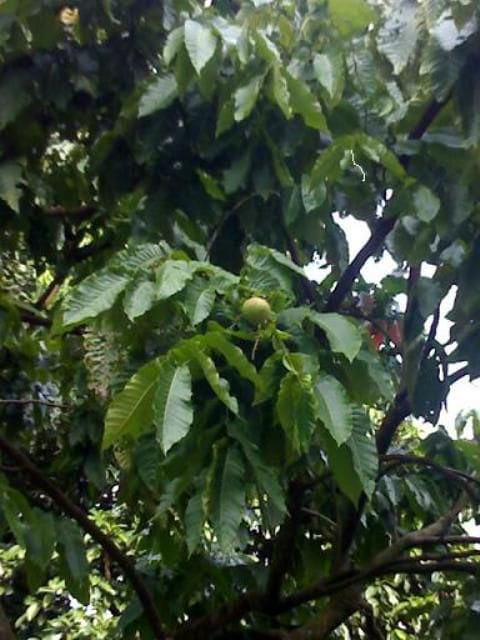
Have you ever walked through the Malaysian rainforest in the early months of the year and noticed a sudden, breathtaking splash of reddish-pink foliage standing out against the dense green canopy? If so, you have likely witnessed the stunning "leaf flush" of the Perah tree, scientifically known as Elateriospermum tapos Blume.
Known locally as Buah Perah, this unique native species is a legendary part of Malaysia's botanical and culinary heritage. From its explosive seed dispersal on hot afternoons to its starring role in Pahang's traditional fermented condiment, Asam Rong, this tree is a true forest treasure.
For Malaysian home gardeners, native plant enthusiasts, or lovers of traditional food culture, Buah Perah represents a wonderful bridge between nature and heritage. Known by various other names across Southeast Asia — such as kelampai in Sarawak, tapus in Indonesia and in the timber trade, pra or kra in Thailand, perah ikan in Peninsular Malaysia and Sabah, and dungku in Sarawak — this species is far more than just a forest giant.
This comprehensive guide covers the botany, garden care, traditional culinary prep, critical safety warnings, and exciting modern medical discoveries of Elateriospermum tapos.
Plant Overview: Understanding the Perah Tree
The Perah tree (Elateriospermum tapos) is a member of the diverse Euphorbiaceae (rubber tree) family. It belongs to a strictly monotypic genus — meaning Elateriospermum has only one single species in the entire world!
Botanical Characteristics
In its wild habitat, the Perah tree is a magnificent deciduous or semi-deciduous canopy giant, capable of soaring up to 27 metres tall, with rare wild specimens recorded up to 50 metres in dense forests. The straight trunk can have a diameter of up to 60 cm and is sometimes fluted at the base with buttress roots reaching up to 2 metres high. When damaged, the bark, leaves, and fruit stalks exude a copious, highly sticky white-to-yellowish latex.
A key diagnostic feature of the Perah tree is its simple, glossy, dark green leaves. Unlike the Para rubber tree (Hevea brasiliensis), which has compound three-leaflet (trifoliate) leaves, Perah possesses strictly simple leaves. It also has a long petiole (leaf stalk) swollen at both ends, with two small, unique basal glands situated right at the junction where the petiole meets the leaf blade.
The tree exhibits a highly synchronized annual deciduous cycle. During the dry season (typically January or February), mature trees shed their foliage. This is immediately followed in March by a striking leaf flush of bright reddish-pink young leaves and concurrent flowering, which attracts forest pollinators such as dammar bees. Its flowers are small, fragrant, and white to pale yellow. The fruit is a large, woody, oblong-ellipsoid capsule with three longitudinal grooves. During the hot season of August and September, these capsules dry out, build up immense mechanical tension, and split open with a loud, sudden "pop!" (a process called ballochory), firing the large, chestnut-brown seeds far from the mother tree.
Natural Habitat and Climate Suitability
The Perah tree is indigenous to Thailand, Peninsular Malaysia, Sumatra, Java, and Borneo. It thrives in lowland evergreen and mixed dipterocarp forests up to 600 metres above sea level. As a native of the hot, humid lowland tropics, it is perfectly suited for Malaysia's climate, relishing high humidity, constant warmth, and high annual rainfall.
Growing and Care Guide for Malaysian Gardens
While a wild canopy tree is too massive for a standard backyard, Buah Perah makes a highly attractive, small-to-medium ornamental tree or large shrub (reaching 10 to 20 feet / 3 to 6 metres) when cultivated in domestic gardens, parks, or large containers.
Here is how you can successfully grow and care for Buah Perah in Malaysian tropical conditions:
- Sunlight: Perah thrives in full sun to partial shade. Bright, direct sunlight is highly recommended because it stimulates leaf production and triggers the intense, beautiful reddish-pink color of new leaf flushes.
- Watering: Keep a regular watering schedule. Water the plant deeply whenever the top inch of soil feels dry. While established trees have some tolerance to dry spells (which can trigger their deciduous leaf-fall cycle), young plants require consistently moist soil to establish robust root systems.
- Soil: In the wild, the Perah tree is highly adaptable, growing in deep clays, clay-loams, sandy clays, loams, and lateritic soils. In gardens, it grows best in deep, fertile, and well-draining loamy soils with a slightly acidic to neutral pH (5.5 to 7.5). Remarkably, it can even thrive in nutrient-deficient, highly acidic, sandy kerangas (heath) soils.
- Pruning: To keep the tree at a manageable shrub-like size in your garden, perform regular pruning. Remove dead, diseased, or crossing branches to maintain air circulation inside the crown.
-
Propagation: Propagation is achieved primarily via seeds. Keep these key tips in mind:
- Sow Fresh: Perah seeds are recalcitrant (short-lived) and lose viability very quickly. Collect fallen seeds and sow them as fresh as possible.
- Overcome Dormancy: The hard, glossy outer shell creates a physical barrier to water. For best results, gently scarify (scratch) the seed coat or soak the seeds in warm water before planting to break their physical dormancy.
- Sowing Medium: Plant the pre-treated seeds in a moist, well-draining seed-starting mix at warm temperatures (20 to 25 °C).
- Pests and Growing Mistakes: In the wild, scatter-hoarding forest rodents such as the red spiny rat (Maxomys surifer) are major seed predators. In home gardens, protect fresh seeds from common garden pests like squirrels and rats. Avoid soggy, waterlogged soil with poor drainage, which leads to root rot. Ensure the plant is sheltered from cold winds if you live in elevated highland areas, as Perah is highly frost-sensitive.
Uses and Health Benefits: Traditional vs. Scientific
The Perah tree has been utilized for generations by local communities. However, before exploring its culinary and medicinal benefits, a critically important safety warning must be addressed.
⚠️ CRITICAL SAFETY WARNING: RAW SEEDS ARE POISONOUS!
Never consume raw Buah Perah seeds.
Fresh, raw seeds contain highly dangerous amounts of cyanogenic glycosides (specifically linamarin, lotaustralin, and amygdalin), with concentrations of amygdalin reaching up to 660 ppm in fresh seeds. When you bite or chew the raw seed, the cells break down, triggering a reaction that releases volatile, highly toxic hydrogen cyanide (HCN) gas. Ingesting raw seeds causes acute cyanide poisoning, leading to severe symptoms and can even be fatal.
Fortunately, these toxins are highly water-soluble and heat-sensitive. Thorough cooking (boiling or roasting) or long-term fermentation completely degrades the glycosides and volatilizes the cyanide, making the seeds completely safe and delicious to eat.
Traditional and Culinary Uses
Once properly detoxified, Buah Perah is transformed into a highly prized, nutritious delicacy:
- Asam Rong (Fermented Condiment): A famous culinary tradition in the Jerantut and Raub districts of Pahang. To make Asam Rong, mature seeds are gathered from the forest, cracked open to extract the white inner kernels, and sun-dried for 3 to 7 days. The dried kernels are then pounded with a little water and salt, packed into jars (balang), and allowed to ferment for a month or more. During fermentation, the paste changes from beige to oily dark brown, developing a rich, savory, slightly bitter and nutty flavor. It is used as the base for Gulai Asam Rong, a rich curry cooked with local river fish (like ikan patin or baung) or wild vegetables.
- Pickles and Delicacies: In the East Coast of Malaysia, cooked seeds are frequently pickled in salt water to preserve them as a side dish. In Sarawak, the Sakai and Bidayuh tribes prepare fermented perah by packing the pounded seeds in bamboo culms and burying them in wet earth for a month to ensure slow, thorough anaerobic detoxifying fermentation.
- Traditional Medicine: The white, sticky latex of the Perah tree has rapid-drying properties. In Sumatra and Sarawak, the Bidayuh people traditionally apply fresh latex once a day directly onto dirty wounds and cracked skin on the soles of bare feet to shield and protect them.
- Other Cultural Uses: The Orang Asli have historically used the latex to polish blowpipes to a glossy dark sheen. Children also love threading the large, smooth seeds together to make toy beetles in a traditional game called "conquerors".
Scientifically Supported Evidence
In recent years, botanical researchers have subjected Elateriospermum tapos to rigorous scientific testing, validating many of its traditional values and uncovering incredible modern pharmaceutical applications:
1. Exceptional Nutritional Profile and Omega-3 Rich Seed Oil
Standard food science analyses show that processed Buah Perah seed flour is incredibly energy-dense and nutritious. It contains approximately 36.49% crude fat, 14.10% to 16.10% crude protein, and 25.36% carbohydrates. Its protein content is higher than that of hazelnuts, pecans, and walnuts. The seed oil is exceptionally rich in alpha-linolenic acid (ALA), an essential omega-3 fatty acid, which makes up about 17.14% of its total lipid profile — highly beneficial for cardiovascular health.
2. Natural Anti-Obesity and Diabetes Enzyme Inhibitors
Pharmacological studies reveal that phytochemicals in Perah seed and shell extracts act as potent natural inhibitors of key metabolic digestive enzymes:
- Pancreatic Lipase Inhibition: The extract suppresses pancreatic lipase, the enzyme responsible for digesting fats in the gut. By blocking this enzyme, the body absorbs fewer fats, which promotes healthy weight management.
- Alpha-Amylase and Alpha-Glucosidase Inhibition: The seeds contain compounds that block these carbohydrate-digesting enzymes. This slows down glucose absorption and helps prevent sudden blood sugar spikes after meals.
3. High Antioxidant and Selective Anti-Cancer Activities
Laboratory tests have demonstrated that ethanolic extracts of Perah fresh leaves and bark are packed with protective flavonoids and phenolics, displaying exceptionally high antioxidant power. In vitro cell assays showed that ethanolic extracts exert potent chemopreventive, antiproliferative, and apoptotic effects against several human cancer cell lines, including cervical cancer (HeLa), colon cancer (HT-29, HCT116), breast cancer (MCF-7), and lung cancer (A549). Crucially, non-cancerous control cells remained highly resistant to these extracts, highlighting a promising, selective safety profile for future drug development.
4. Brain Protection and Maternal Obesity Treatment
In what is perhaps the most groundbreaking research on E. tapos, scientists at Universiti Putra Malaysia (UPM) formulated a novel functional probiotic yogurt incorporating Perah seed extract. In extensive animal trials, feeding this plant-integrated yogurt to obese pregnant mothers led to gradual, healthy weight loss, improved liver, kidney, and lipid profiles — and most importantly, it shielded offspring from the intergenerational transmission of obesity and cognitive deficits. Bioactive flavonoids (such as kaempferol and amentoflavone) in the extract boosted crucial endogenous brain antioxidants, reversing neuroinflammation and improving memory function.
Malaysian Culture and Heritage Connections
The Perah tree is deeply interwoven with the traditional life of rural Malaysia. Historically, its seasonal flowering was used by local farmers as an agricultural indicator, signaling the exact start of the traditional upland rice-planting season.
Additionally, the wood of the tree has its own place in forest folklore. In past conflicts, it was prized as firewood because the burning of Perah wood is said to produce virtually no smoke, allowing individuals to cook in the jungle without alerting enemies to their position.
The wood itself is classified as a "Medium Hardwood" under the timber name Perah (ASEAN trade name Tapus). It features a cream-colored sapwood and a dark-brown heartwood highlighted by beautiful, dark-colored flaming streaks. The timber is very hard and very heavy, with a density of 735–1,235 kg/m³ air dry. Because it takes a glossy, beautiful polish, it is traditionally carved into small, prized items such as the curved handles of rubber tapping knives.
Today, the wild Perah tree is facing pressure. Due to rapid land development and deforestation, wild trees are becoming increasingly scarce in Malaysian forests. In many villages in Pahang, the scarcity of wild Perah has forced communities to make Asam Rong using rubber tree seeds (biji getah) instead. While rubber seeds serve as a common alternative, village elders agree that authentic Asam Rong made from genuine Buah Perah is far superior in flavor, oiliness, and aroma. Planting and conserving the Perah tree in home gardens, eco-parks, and forest reserves is therefore vital to preserving this invaluable Malaysian culinary and cultural heritage.
Conclusion: Why Perah is Worth Knowing
The Perah tree (Elateriospermum tapos) is far more than just a magnificent native of our tropical rainforests. It is a stunning visual masterpiece with its reddish-pink flushing leaves, a deep-rooted cultural icon of Malay village heritage, and a nutritional powerhouse brimming with essential omega-3 fatty acids.
While raw safety must always be respected, modern pharmacology has proved that this plant holds incredible potential for fighting obesity, combatting cancer, and shielding the brains of the next generation from metabolic damage. By growing this native beauty in our gardens and protecting it in our forests, we keep a beautiful piece of Malaysia's natural and cultural history alive for generations to come.
References
- Forest Research Institute Malaysia (FRIM): Flushing Perah
- Flora of Thailand: Elateriospermum tapos Blume
- Wikipedia (English): Elateriospermum
- Useful Tropical Plants Database: Elateriospermum tapos
- MDPI Nutrients (2023): Early Intervention of Elateriospermum tapos Yoghurt in Obese Dams
- Frontiers in Endocrinology (2023): The role of Elateriospermum tapos yoghurt in mitigating maternal obesity
- Journal of Medicinal Plants Research (2018): Antioxidant and antiproliferative activities of ethanolic extracts of Elateriospermum tapos
- ITTO Tropical Timbers Database: Tapus (Elateriospermum tapos)